Entry Requirements
Visa requirements for Suriname depend on which passport you hold. Check the Traveller visa tool to see whether your passport needs a visa and, if so, how long you can stay.
Check if you need a visa for SurinameCurrency
- Name
- Surinamese Dollar
- Code
- SRD
- Symbol
- SR$
- ATMs in Paramaribo.
- USD and EUR can be exchanged at banks.
- Cash preferred for most transactions.
- Cards accepted at larger Paramaribo hotels.
Power Outlets
- Outlet types
- Type A, Type B, Type C, Type F
- Voltage
- 127V/220V
- Frequency
- 60Hz
Time Zone
Local time now
- SRT (UTC−3) — no daylight saving
Best Time to Visit
Suriname has two dry seasons: the short dry (August–October) and long dry (February–April). Both are suitable for the rainforest and Brownsberg nature reserve. February–March is best for turtle nesting at Galibi.
Tipping Customs
| Where | Typical |
|---|---|
| Restaurants | 10% |
| Jungle guides | $10 USD per day |
| Hotels | SR$5–10 for porters |
Dress Code
What "modest dress" usually means
Shoulders and knees covered, nothing tight or sheer, no low-cut tops, no visible underwear or midriff. In most places this is a social expectation rather than a legal rule.
- Casual throughout
- Long sleeves and trousers for rainforest trips
- Modest dress in Hindu and Muslim communities
Loose, breathable fabrics work best in warm climates.
Social Etiquette
- Suriname is the most ethnically diverse country in the Americas — Hindustani (Indian), Creole, Javanese, Maroon, Amerindian, Chinese, and Dutch communities coexist
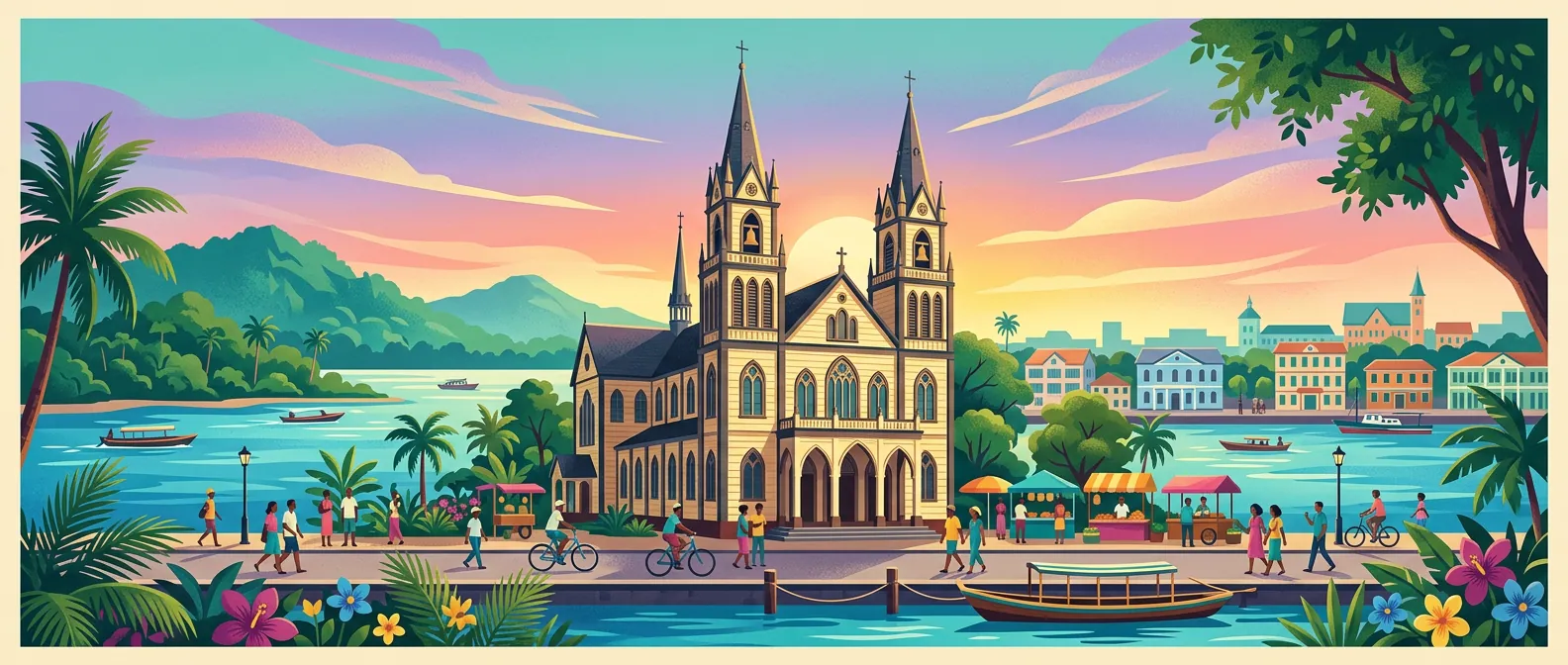
- Paramaribo's inner city (UNESCO World Heritage) has the world's only wooden colonial city centre from the 17th–18th centuries
- Maroon communities (descendants of escaped slaves) maintain vibrant African cultural traditions in the interior rainforest — visit respectfully through community-run tours
- The rainforest covers over 90% of the country — one of the most pristine in the Americas
Local Laws
Laws change. Verify current rules with your country's official travel advisory before departure.
- LGBTQ+ activity is not criminalised but social attitudes are conservative in many communities
- Drug trafficking carries severe penalties
- Interior communities: always travel with a guide; some areas require permits