Entry Requirements
Visa requirements for Madagascar depend on which passport you hold. Check the Traveller visa tool to see whether your passport needs a visa and, if so, how long you can stay.
Check if you need a visa for MadagascarCurrency
- Name
- Malagasy Ariary
- Code
- MGA
- Symbol
- Ar
- Madagascar uses the Malagasy Ariary (MGA), and you’ll rely heavily on cash, especially outside big cities; bring euros or US dollars to exchange on arrival and expect limited card acceptance and patchy ATMs.
- According to multiple Madagascar travel guides, euros are the most widely accepted foreign currency for exchange, followed by USD, while the Ariary is not commonly available outside Madagascar.
- This is especially handy because everyday costs (meals, taxis, entrance fees) are small but frequent, and ATM withdrawal limits can be low.
Power Outlets
- Outlet types
- Type C, Type E
- Voltage
- 220V
- Frequency
- 50Hz
Time Zone
Local time now
- EAT (UTC+3) — no daylight saving
Best Time to Visit
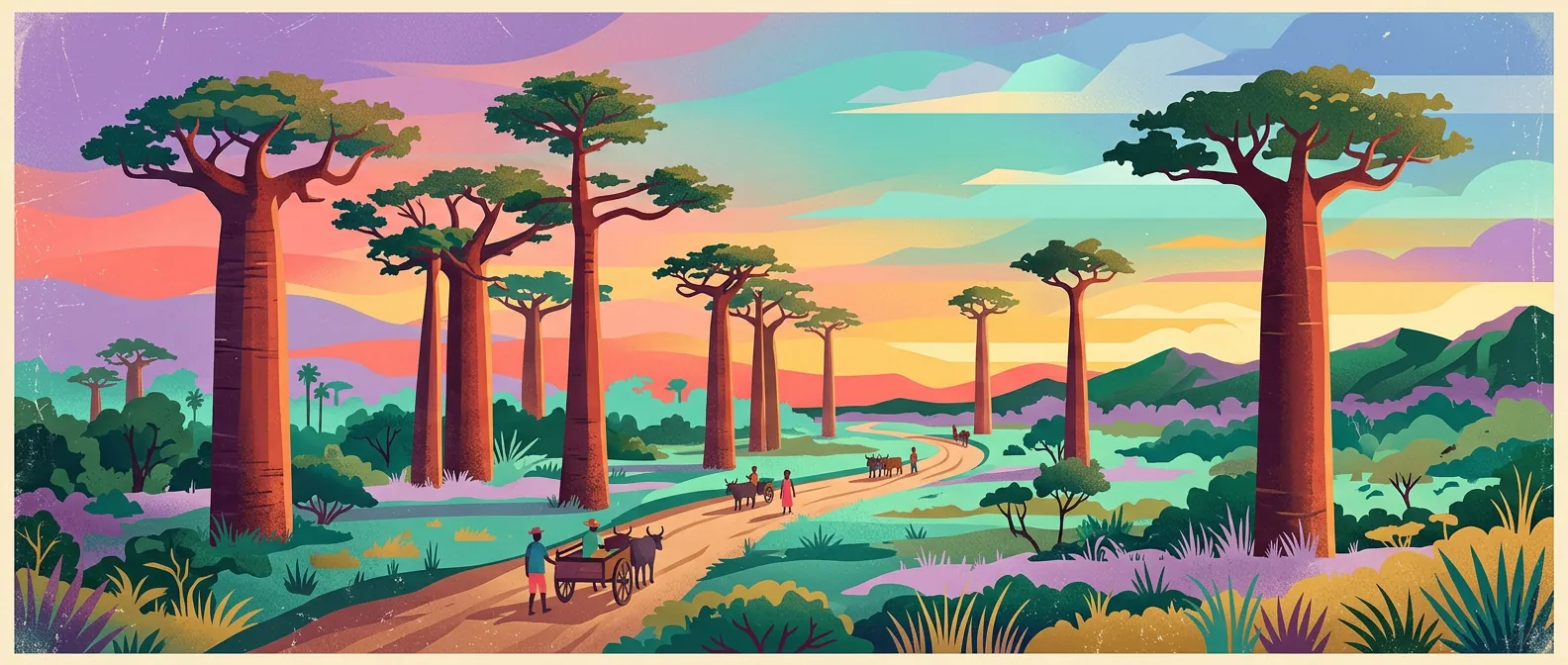
April–October is the dry season — ideal for Ranomafana and Andasibe national parks (lemur trekking), the Avenue of the Baobabs (sunset in May–September is extraordinary), and Nosy Be. November–March is cyclone season on the east coast and north; some roads become impassable.
Tipping Customs
| Where | Typical | Notes |
|---|---|---|
| Restaurants | 10% | Not always expected in local hotelys (small restaurants) |
| Guides (lemur trekking) | $5–10 USD per day | Essential — guides spot animals you would never find alone |
| Porters | $3–5 USD per day | |
| Drivers | $5–10 USD per day | 4WD + driver is the standard way to travel between reserves |
Dress Code
What "modest dress" usually means
Shoulders and knees covered, nothing tight or sheer, no low-cut tops, no visible underwear or midriff. In most places this is a social expectation rather than a legal rule.
- Practical and modest throughout
- Muted colours for wildlife trekking — avoid bright clothing
- Long sleeves and trousers for forest trekking (leeches and insects)
- Modest dress in villages — ask before photographing
Loose, breathable fabrics work best in warm climates.
Social Etiquette
- Fady (taboos) are a central part of Malagasy culture — each community has its own; ask your guide what fady apply locally
- Never point directly at a tomb — tombs are sacred and the focal point of ancestor veneration
- Always ask permission before photographing people or villages
- Malagasy people are descended from African and Southeast Asian (Austronesian) ancestors — the culture is a fascinating blend of both worlds
Local Laws
Laws change. Verify current rules with your country's official travel advisory before departure.
- Exporting lemurs or endemic wildlife is illegal and a serious offence
- Drug offences carry severe penalties
- Road travel: 4WD is essential outside the RN7 highway — many roads are only passable in dry season
- Political instability periodically affects Madagascar — check travel advisories