Entry Requirements
Visa requirements for Libya depend on which passport you hold. Check the Traveller visa tool to see whether your passport needs a visa and, if so, how long you can stay.
Check if you need a visa for LibyaCurrency
- Name
- Libyan Dinar
- Code
- LYD
- Symbol
- LD
- Cash economy.
- ATMs scarce and unreliable.
- Bring USD or EUR to exchange.
- International cards largely non-functional.
- Note: Libya has been in conflict since 2011; most Western governments advise against all travel.
- This entry is provided for information only — verify conditions thoroughly before any visit.
Power Outlets
- Outlet types
- Type C, Type L
- Voltage
- 127V/230V
- Frequency
- 50Hz
Time Zone
Local time now
- EET (UTC+2) — no daylight saving
Best Time to Visit
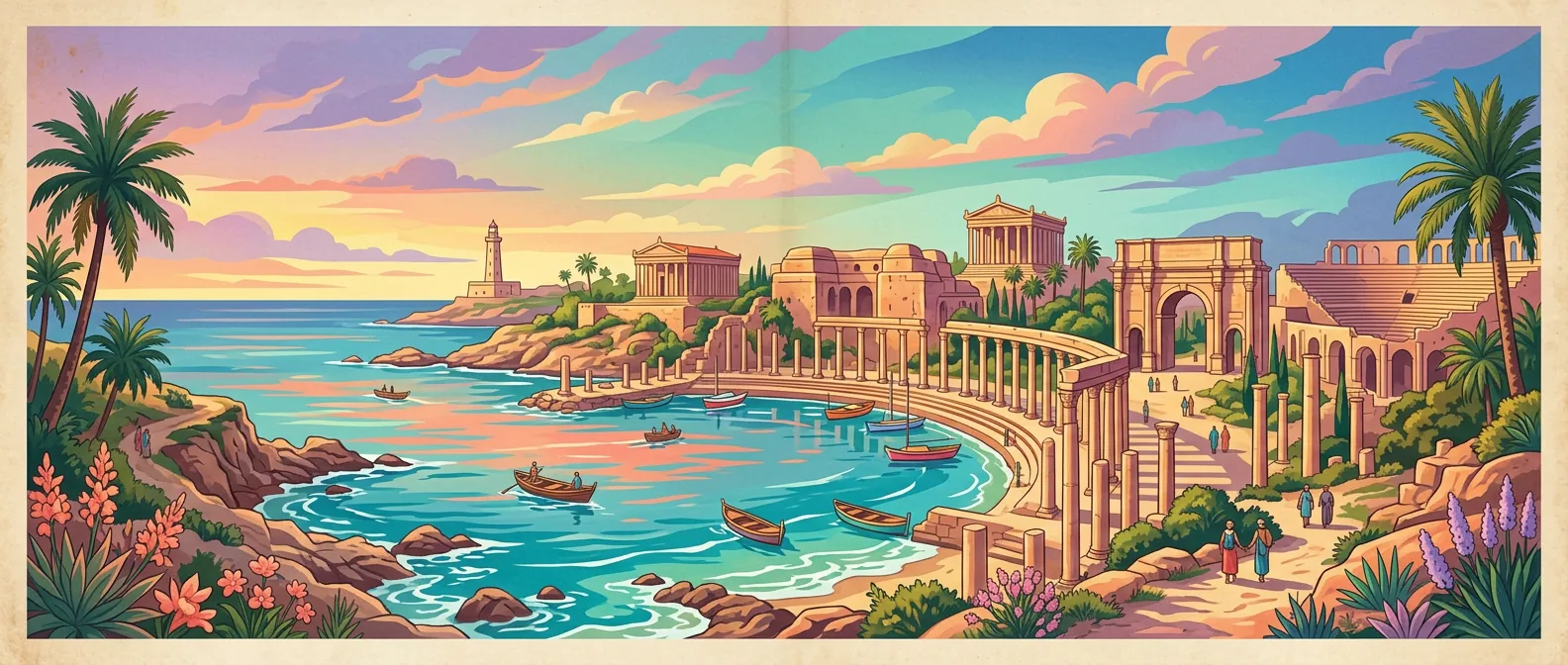
October–April is the most tolerable climate — Leptis Magna near Khoms and Sabratha near Tripoli are best in cooler months. The Saharan interior is extreme in summer. However: check your government's travel advisory. The political and security situation remains complex and visitor safety cannot be guaranteed in many areas.
Tipping Customs
| Where | Typical | Notes |
|---|---|---|
| Restaurants | 10% | Tip in local dinar |
| Guides | $10–15 USD per day | A licensed guide is essential and practically mandatory |
Dress Code
What "modest dress" usually means
Shoulders and knees covered, nothing tight or sheer, no low-cut tops, no visible underwear or midriff. In most places this is a social expectation rather than a legal rule.
- Conservative dress is essential throughout — Libya is a conservative Muslim country
- Women: loose, long clothing covering arms and legs; headscarf appreciated
- Men: long trousers and covered shoulders
- Avoid anything revealing in public
Loose, breathable fabrics work best in warm climates.
Social Etiquette
- Libyans are traditionally hospitable — but the political situation since 2011 means the population has complex relationships with foreign visitors from Western countries
- Alcohol is completely prohibited in Libya
- Photography is extremely sensitive — do not photograph military, police, checkpoints, or anything that could be interpreted as intelligence-gathering
Local Laws
Laws change. Verify current rules with your country's official travel advisory before departure.
- IMPORTANT: Most governments advise against all travel to Libya. Kidnapping, armed conflict, and lawlessness affect many areas. If you visit, do so only with specialist security support.
- Alcohol is completely prohibited
- LGBTQ+ activity is illegal and carries severe penalties
- Photography restrictions are extensive and strictly enforced