Entry Requirements
Visa requirements for Ethiopia depend on which passport you hold. Check the Traveller visa tool to see whether your passport needs a visa and, if so, how long you can stay.
Check if you need a visa for EthiopiaCurrency
- Name
- Ethiopian Birr
- Code
- ETB
- Symbol
- Br
- Ethiopia is a cash-first country, and you’ll use Ethiopian Birr (ETB) for almost everything; bring crisp foreign cash (USD or EUR), use banks for exchange, expect limited card acceptance outside top hotels, and rely on ATMs in big cities while keeping a backup stash of cash.
- The official currency is the Ethiopian Birr (ETB), subdivided into 100 santim, and it’s the only legal tender for everyday transactions like food, transport, and shopping according to Ethiopia’s National Bank and tourism authorities.
- Credit cards are still the exception, mainly accepted by Ethiopian Airlines, international hotels, and a few travel agencies, so most travellers should plan to pay with cash for markets, local eateries, and rural stays.
Power Outlets
- Outlet types
- Type C, Type E, Type F, Type L
- Voltage
- 220V
- Frequency
- 50Hz
Time Zone
Local time now
- EAT (UTC+3) — no daylight saving. Ethiopia also uses its own calendar (13 months) and clock system (day starts at 6am = hour 0) — confirm times carefully.
Best Time to Visit
October–January is the dry season and best time to visit. January features Timkat (Ethiopian Christmas, 7 Jan) and Timkat processions. The Omo Valley tribal festivals fall in September. Avoid June–September (rainy season) for most areas.
Tipping Customs
| Where | Typical | Notes |
|---|---|---|
| Restaurants | 10% | Increasingly expected in tourist restaurants in Addis |
| Guides | $5–10 USD per day | Essential — guides are often the main earner for their families |
| Drivers | $5 USD per day | |
| Hotels | 20–50 ETB for porters |
Dress Code
What "modest dress" usually means
Shoulders and knees covered, nothing tight or sheer, no low-cut tops, no visible underwear or midriff. In most places this is a social expectation rather than a legal rule.
- Modest dress throughout — Ethiopia is both Christian and Muslim in different regions
- Women: cover shoulders and knees; headscarves appreciated at churches
- Remove shoes before entering Orthodox churches — many require this
- White garments are traditional for church attendance — Ethiopians dress beautifully for worship
Loose, breathable fabrics work best in warm climates.
Social Etiquette
- The coffee ceremony (bunna) is sacred — it is an honour to be invited; expect three cups
- Greet with a slight bow and right hand — adding the left hand to your own right forearm shows extra respect
- Injera (sourdough flatbread) is the base of every meal — always eat with your right hand
- Ethiopians are enormously proud of their history and independence — engage with genuine curiosity
- Never refuse food — even a symbolic taste is respectful
Local Laws
Laws change. Verify current rules with your country's official travel advisory before departure.
- Drone flying requires a Civil Aviation Authority permit — apply months in advance
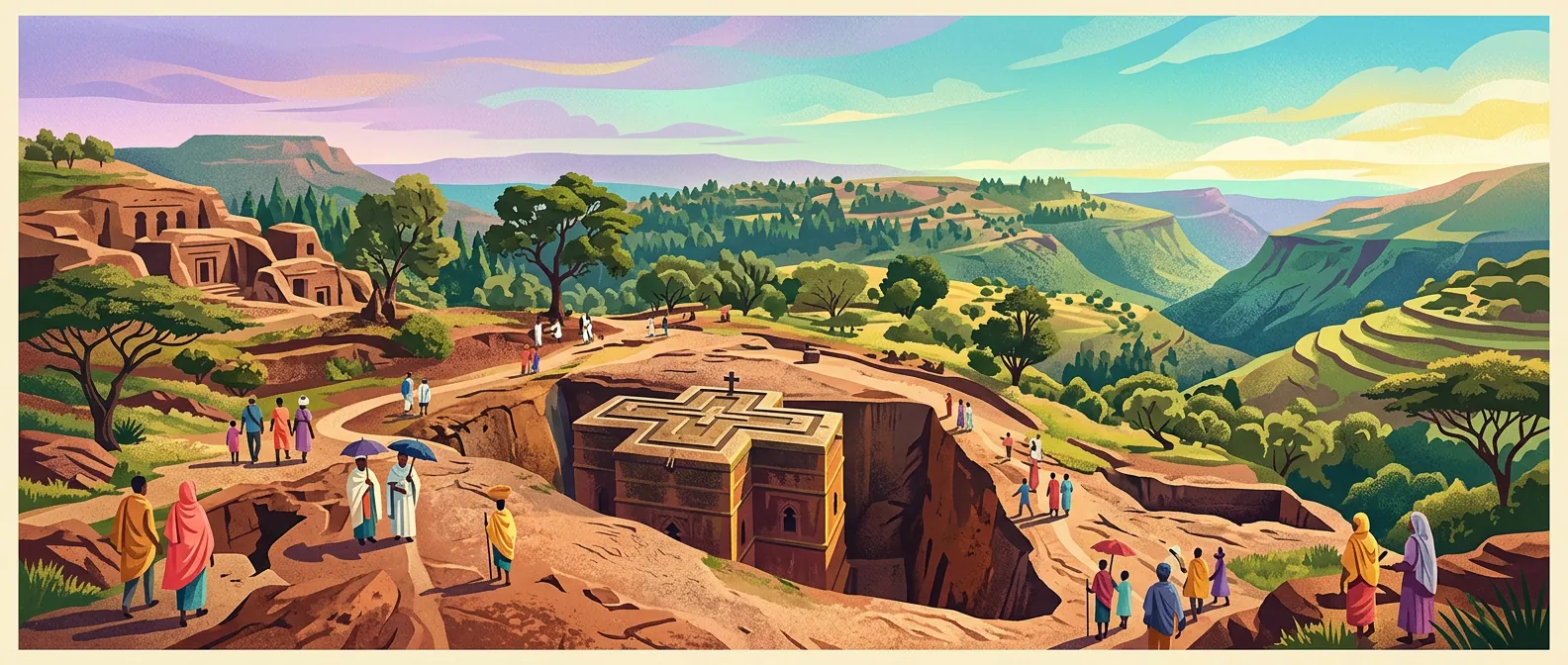
- Photography at Lalibela, Aksum, and other heritage sites is permitted but always ask first; some require a fee
- The political situation in some regions (Tigray, Amhara, Oromia) can change rapidly — check your government's travel advisory before visiting
- LGBTQ+ activity is illegal — exercise extreme caution
- Drugs carry severe penalties