Requisitos de entrada
Visa requirements for Botswana depend on which passport you hold. Check the Traveller visa tool to see whether your passport needs a visa and, if so, how long you can stay.
Verificar se precisa de visto para BotswanaGood to Know
- One of Africa's most stable democracies, and one of its most prosperous economies
Moeda
- Nome
- Botswanan Pula
- Código
- BWP
- Símbolo
- P
- Botswana uses the Pula (BWP).
- Visa and Mastercard are widely accepted at hotels, safari lodges and many restaurants in the towns, and ATMs are easy to find in major centres.
- Cash remains essential for fuel stations, small shops, rural areas and tipping — in Pula or USD.
- South African Rand is widely accepted near the border.
Tomadas elétricas
- Tipos de tomada
- Type D, Type G, Type M
- Voltagem
- 230V
- Frequência
- 50Hz
Fuso horário
Hora local agora
- CAT (UTC+2) — no daylight saving
Melhor época para visitar
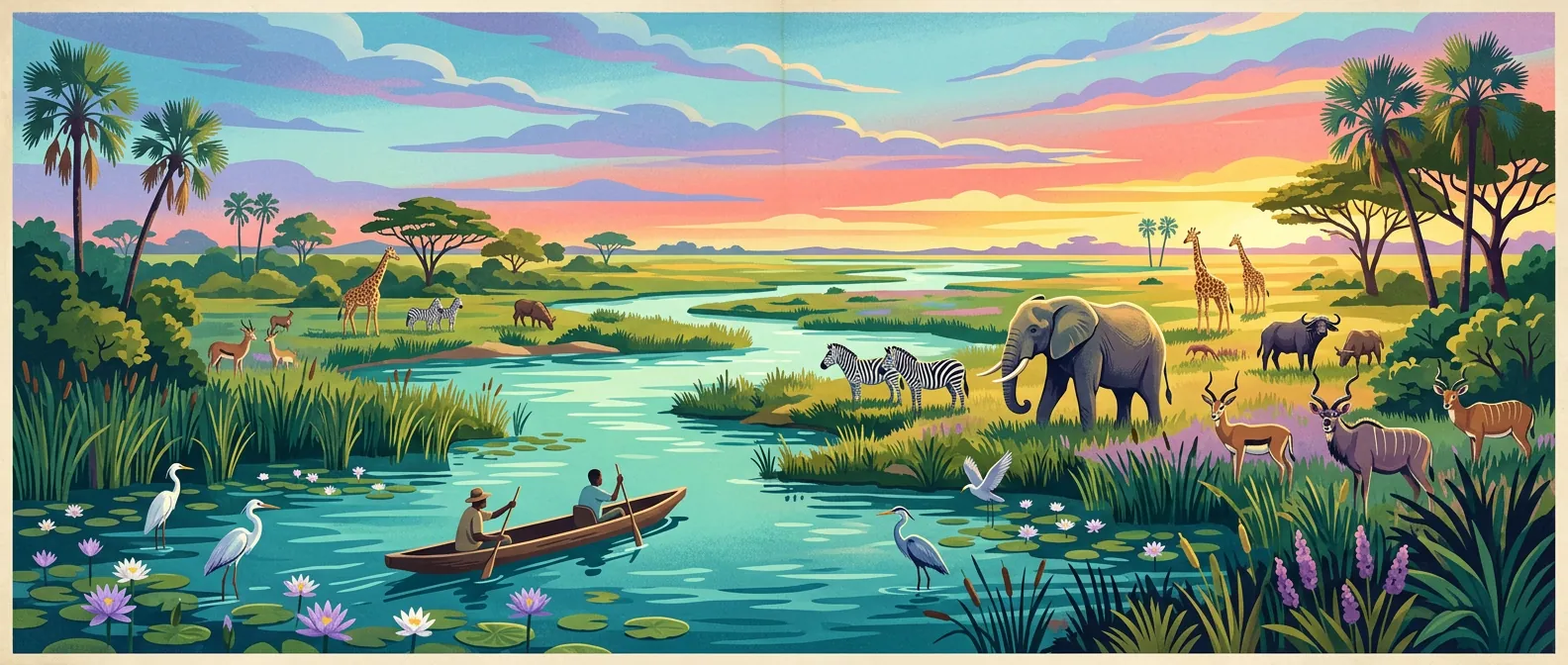
'When's the best time?' is the wrong question for Botswana — the right one is 'best time for what?'. The quirk that explains everything: the water in the Okavango Delta doesn't come from local rain, it comes from rain falling in the Angolan highlands thousands of kilometres away months earlier. Peak flood in the Delta lands in the middle of the dry season, not during the rains.
Early dry (May–June) is green bush and cold nights — frost in some areas — with the flood only starting to rise and wildlife still spread out. Great for birding; game viewing takes a bit more patience.
Peak dry (July–September) is the classic 'water in the middle of a desert' effect: channels full, floodplains flooded, wildlife funnelled in from the drying land around. Also peak price and peak crowds.
Late dry (October) is brutal — 40°C+ afternoons, 42°C not unusual — but guides consistently report some of their best sightings as everything desperate crowds the shrinking water. A payoff month if you can handle the heat.
Green season (November–April) is the inverse of peak dry: local rain peaks but the Delta is at its lowest in the north. Meanwhile the Makgadikgadi side fills with pans and attracts thousands of flamingos, impala calves are everywhere, skies are dramatic, prices drop, and rain usually comes as short afternoon storms rather than all-day washouts.
Hábitos de gorjeta
| Where | Typical | Notes |
|---|---|---|
| Safari lodges | $15–20 USD per day (staff pool) | Leave in the communal tip box at camp checkout |
| Game drive guides | $15–20 USD per day | |
| Mokoro polers (Okavango) | $10–15 USD per day | |
| Restaurants | 10% |
Código de vestuário
- Safari neutrals — khaki, olive, beige. Avoid white and bright colours on game drives.
- Warm layers for early morning game drives (June–August can be 0–5°C at dawn)
- Smart casual for lodge dinners
- Long sleeves at dusk (mosquitoes)
Tecidos soltos e respiráveis são os melhores em climas quentes.
Etiqueta social
- Batswana are proud, reserved and polite — match that register rather than arriving loud
- Greeting before any interaction is essential — 'Dumela rra' (to a man) or 'Dumela mma' (to a woman)
- The San Bushmen of the Kalahari are the world's oldest culture — visit through ethical, community-owned operators only
- Wildlife conservation is central — do not approach or feed animals; the Big 5 and wild dog packs roam freely
Leis locais
As leis mudam. Verifique as regras atuais com o aviso de viagem oficial do seu país antes da partida.
- Strict anti-poaching laws — do not collect any natural materials or wildlife products
- LGBTQ+ activity was decriminalised in 2019 — a landmark ruling for Africa; social attitudes still vary significantly
- Self-drive in the Okavango and Kalahari: 4WD essential; always carry spare tyre, water, and fuel
- Photography of airports and military installations prohibited