Requisitos de entrada
Visa requirements for Bolivia depend on which passport you hold. Check the Traveller visa tool to see whether your passport needs a visa and, if so, how long you can stay.
Verificar se precisa de visto para BoliviaGood to Know
- The highest proportion of indigenous people of any country in South America
Moeda
- Nome
- Bolivian Boliviano
- Código
- BOB
- Símbolo
- Bs
- ATMs in La Paz, Sucre, and Uyuni.
- USD widely accepted at hotels and tour operators.
- Cash preferred in markets and local restaurants.
- Street money changers exist but use licensed exchange offices.
Tomadas elétricas
- Tipos de tomada
- Type A, Type C
- Voltagem
- 220V/110V (varies by region)
- Frequência
- 50Hz
Fuso horário
Hora local agora
- BOT (UTC−4) — no daylight saving
Melhor época para visitar
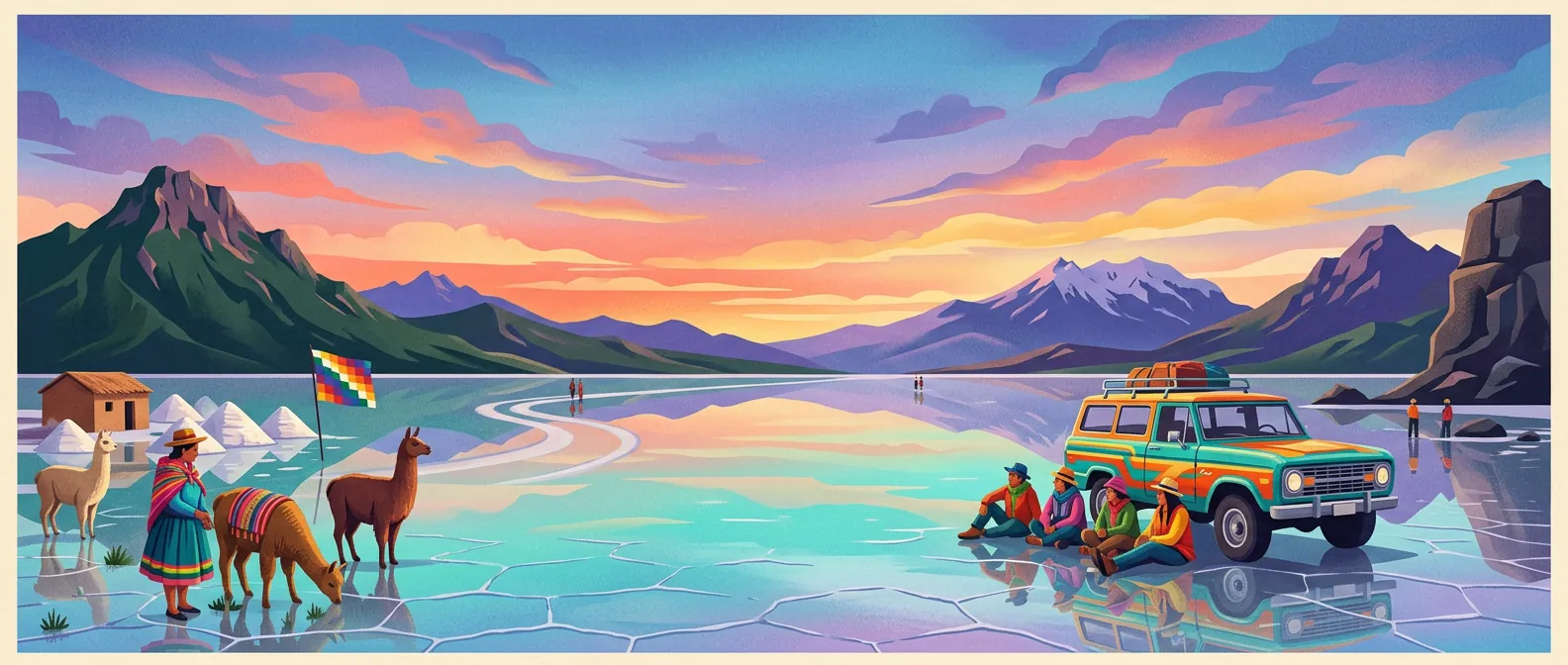
May–September is the dry season — essential for the Salar de Uyuni salt flat (the world's largest, at 10,000 sq km); in May–June the surface is dry and cracked; July–August is peak season; the wet season (November–March) creates the world-famous 'mirror effect' where a thin layer of water reflects the sky. La Paz (3,640m) requires 1–2 days acclimatisation — altitude sickness is serious at this elevation.
Hábitos de gorjeta
| Where | Typical | Notes |
|---|---|---|
| Restaurants | 10% | Not always expected but appreciated |
| Tour guides | $5–10 USD per day |
Código de vestuário
O que normalmente significa roupa modesta
Ombros e joelhos cobertos, nada justo ou transparente, sem decotes profundos, sem roupa interior visível ou barriga à mostra. Na maioria dos lugares, é uma expectativa social em vez de uma regra legal.
- Warm layers for La Paz and the altiplano — temperatures drop sharply at night even in summer
- Sun protection is essential at high altitude — UV is intense
- Modest dress in markets and indigenous communities
Tecidos soltos e respiráveis são os melhores em climas quentes.
Etiqueta social
- Aymara and Quechua cultures are living, not historical — treat them as present-day, not heritage
- Salar de Uyuni is one of the greatest natural wonders on earth — 10,000 sq km of blinding white salt, the largest natural mirror on the planet when flooded
- The Death Road (Yungas Road, North of La Paz) was the world's most dangerous road — now a popular mountain biking descent (30km downhill from 4,650m to 1,200m)
- Lake Titicaca (on the Peru-Bolivia border) is the highest navigable lake in the world (3,812m) — the floating Uros Islands are made entirely of totora reed
Leis locais
As leis mudam. Verifique as regras atuais com o aviso de viagem oficial do seu país antes da partida.
- LGBTQ+ same-sex couples have some rights (since 2010) but no marriage equality; social attitudes mixed
- Drug laws strict despite Bolivia's coca-growing tradition — coca leaf (in tea or chewed) is legal and culturally important; cocaine is not
- Altitude sickness can be severe and life-threatening at extreme altitude — carry diamox and acclimatise properly