Conditions d'entrée
Visa requirements for Ethiopia depend on which passport you hold. Check the Traveller visa tool to see whether your passport needs a visa and, if so, how long you can stay.
Vérifier si vous avez besoin d'un visa pour EthiopiaDevise
- Nom
- Ethiopian Birr
- Code
- ETB
- Symbole
- Br
- Ethiopia is a cash-first country, and you’ll use Ethiopian Birr (ETB) for almost everything; bring crisp foreign cash (USD or EUR), use banks for exchange, expect limited card acceptance outside top hotels, and rely on ATMs in big cities while keeping a backup stash of cash.
- The official currency is the Ethiopian Birr (ETB), subdivided into 100 santim, and it’s the only legal tender for everyday transactions like food, transport, and shopping according to Ethiopia’s National Bank and tourism authorities.
- Credit cards are still the exception, mainly accepted by Ethiopian Airlines, international hotels, and a few travel agencies, so most travellers should plan to pay with cash for markets, local eateries, and rural stays.
Prises électriques
- Types de prises
- Type C, Type E, Type F, Type L
- Tension
- 220V
- Fréquence
- 50Hz
Fuseau horaire
Heure locale actuelle
- EAT (UTC+3) — no daylight saving. Ethiopia also uses its own calendar (13 months) and clock system (day starts at 6am = hour 0) — confirm times carefully.
Meilleure période
October–January is the dry season and best time to visit. January features Timkat (Ethiopian Christmas, 7 Jan) and Timkat processions. The Omo Valley tribal festivals fall in September. Avoid June–September (rainy season) for most areas.
Habitudes de pourboire
| Where | Typical | Notes |
|---|---|---|
| Restaurants | 10% | Increasingly expected in tourist restaurants in Addis |
| Guides | $5–10 USD per day | Essential — guides are often the main earner for their families |
| Drivers | $5 USD per day | |
| Hotels | 20–50 ETB for porters |
Code vestimentaire
Ce que signifie généralement une tenue modeste
Épaules et genoux couverts, rien de serré ou de transparent, pas de décolletés profonds, pas de sous-vêtements ou de ventre visible. Dans la plupart des endroits, il s'agit d'une attente sociale plutôt que d'une règle légale.
- Modest dress throughout — Ethiopia is both Christian and Muslim in different regions
- Women: cover shoulders and knees; headscarves appreciated at churches
- Remove shoes before entering Orthodox churches — many require this
- White garments are traditional for church attendance — Ethiopians dress beautifully for worship
Les tissus amples et respirants sont préférables dans les climats chauds.
Étiquette sociale
- The coffee ceremony (bunna) is sacred — it is an honour to be invited; expect three cups
- Greet with a slight bow and right hand — adding the left hand to your own right forearm shows extra respect
- Injera (sourdough flatbread) is the base of every meal — always eat with your right hand
- Ethiopians are enormously proud of their history and independence — engage with genuine curiosity
- Never refuse food — even a symbolic taste is respectful
Lois locales
Les lois changent. Vérifiez les règles actuelles auprès des avis de voyage officiels de votre pays avant le départ.
- Drone flying requires a Civil Aviation Authority permit — apply months in advance
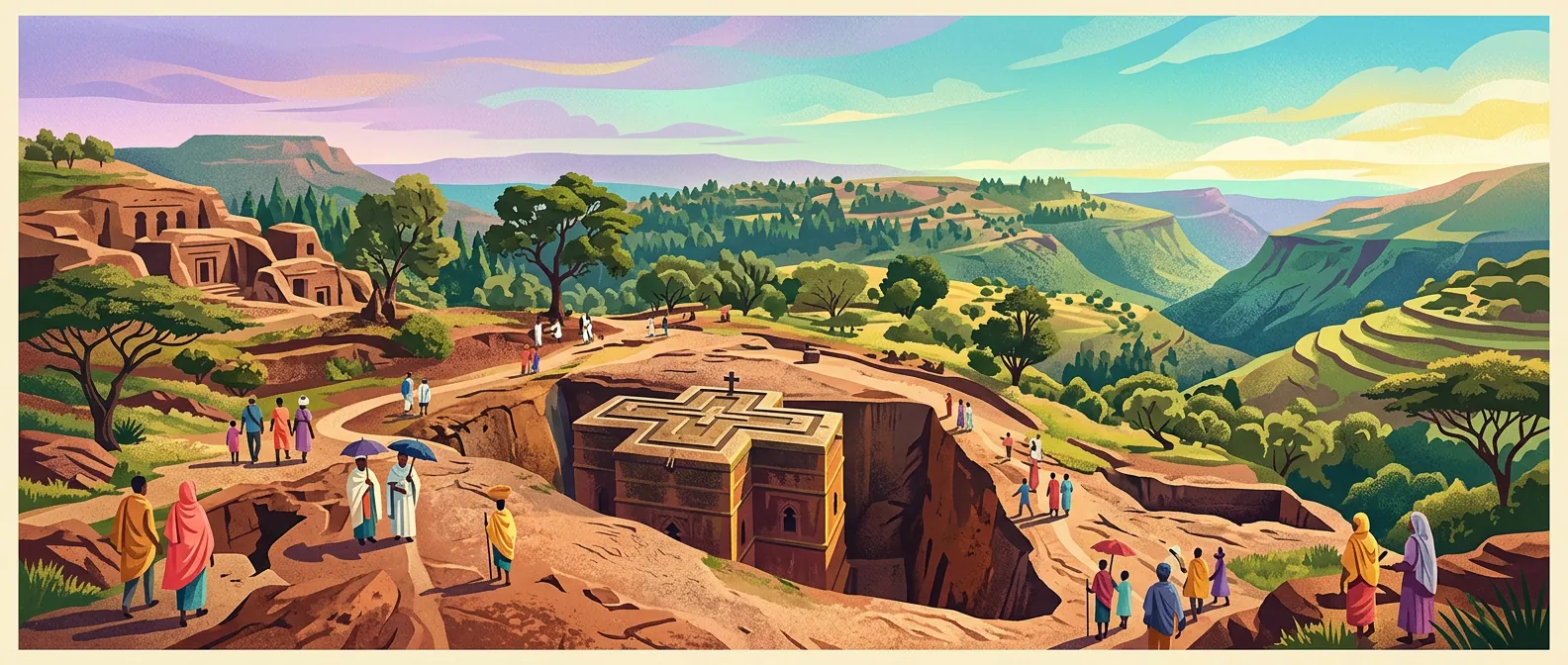
- Photography at Lalibela, Aksum, and other heritage sites is permitted but always ask first; some require a fee
- The political situation in some regions (Tigray, Amhara, Oromia) can change rapidly — check your government's travel advisory before visiting
- LGBTQ+ activity is illegal — exercise extreme caution
- Drugs carry severe penalties