Einreisebestimmungen
Visa requirements for Bolivia depend on which passport you hold. Check the Traveller visa tool to see whether your passport needs a visa and, if so, how long you can stay.
Prüfen, ob Sie ein Visum für Bolivia benötigenGood to Know
- The highest proportion of indigenous people of any country in South America
Währung
- Name
- Bolivian Boliviano
- Code
- BOB
- Symbol
- Bs
- ATMs in La Paz, Sucre, and Uyuni.
- USD widely accepted at hotels and tour operators.
- Cash preferred in markets and local restaurants.
- Street money changers exist but use licensed exchange offices.
Steckdosen
- Steckdosentypen
- Type A, Type C
- Spannung
- 220V/110V (varies by region)
- Frequenz
- 50Hz
Zeitzone
Ortszeit jetzt
- BOT (UTC−4) — no daylight saving
Beste Reisezeit
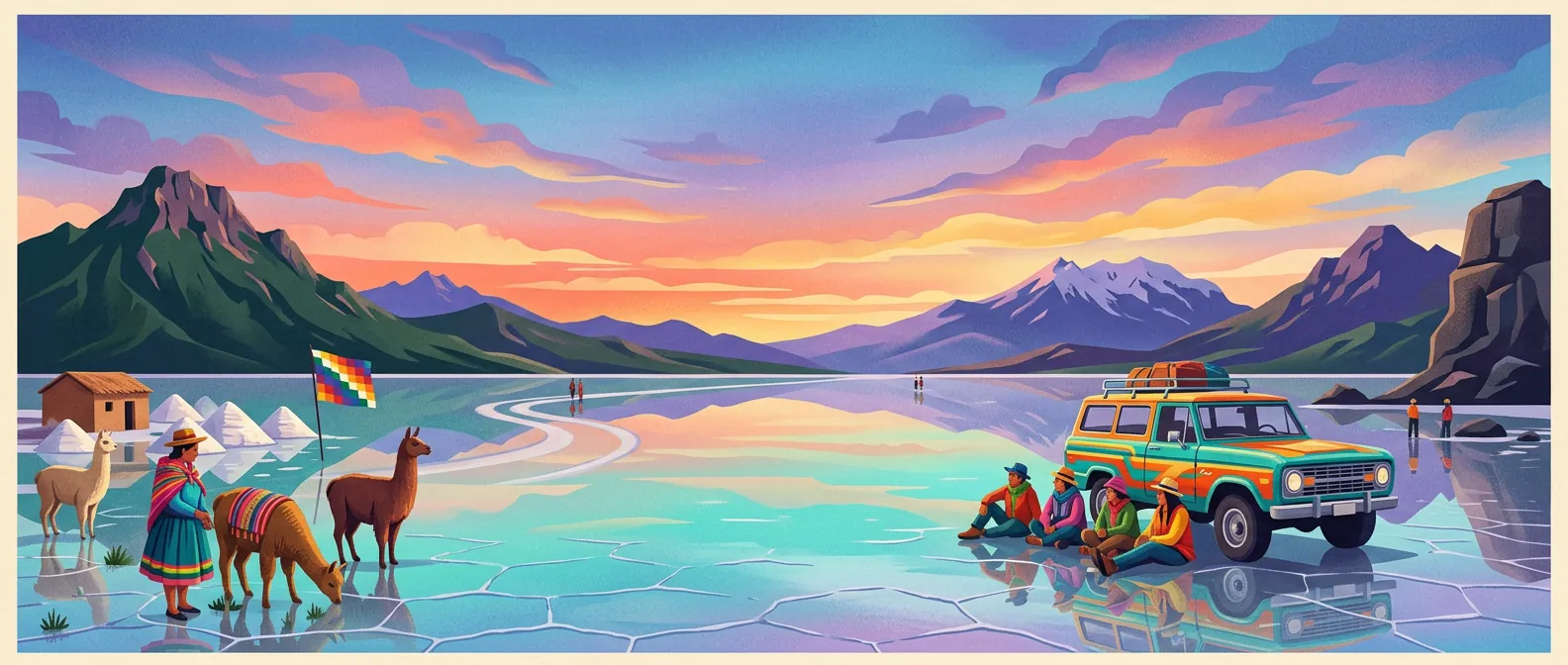
May–September is the dry season — essential for the Salar de Uyuni salt flat (the world's largest, at 10,000 sq km); in May–June the surface is dry and cracked; July–August is peak season; the wet season (November–March) creates the world-famous 'mirror effect' where a thin layer of water reflects the sky. La Paz (3,640m) requires 1–2 days acclimatisation — altitude sickness is serious at this elevation.
Trinkgeldsitten
| Where | Typical | Notes |
|---|---|---|
| Restaurants | 10% | Not always expected but appreciated |
| Tour guides | $5–10 USD per day |
Dresscode
Was bescheidene Kleidung normalerweise bedeutet
Schultern und Knie bedeckt, nichts Enges oder Durchsichtiges, keine tiefen Ausschnitte, keine sichtbare Unterwäsche oder Bauch. In den meisten Ländern handelt es sich um eine gesellschaftliche Erwartung, keine gesetzliche Vorschrift.
- Warm layers for La Paz and the altiplano — temperatures drop sharply at night even in summer
- Sun protection is essential at high altitude — UV is intense
- Modest dress in markets and indigenous communities
Lockere, atmungsaktive Stoffe sind in warmen Klimazonen am besten.
Gesellschaftsetikette
- Aymara and Quechua cultures are living, not historical — treat them as present-day, not heritage
- Salar de Uyuni is one of the greatest natural wonders on earth — 10,000 sq km of blinding white salt, the largest natural mirror on the planet when flooded
- The Death Road (Yungas Road, North of La Paz) was the world's most dangerous road — now a popular mountain biking descent (30km downhill from 4,650m to 1,200m)
- Lake Titicaca (on the Peru-Bolivia border) is the highest navigable lake in the world (3,812m) — the floating Uros Islands are made entirely of totora reed
Lokale Gesetze
Gesetze ändern sich. Überprüfen Sie die aktuellen Vorschriften bei den offiziellen Reisehinweisen Ihres Landes vor der Abreise.
- LGBTQ+ same-sex couples have some rights (since 2010) but no marriage equality; social attitudes mixed
- Drug laws strict despite Bolivia's coca-growing tradition — coca leaf (in tea or chewed) is legal and culturally important; cocaine is not
- Altitude sickness can be severe and life-threatening at extreme altitude — carry diamox and acclimatise properly